

Introduction: A New Era of Insolvency Law
The Insolvency and Bankruptcy Code has brought about a fundamental shift in the way financial distress is addressed in India. By introducing a consolidated and time-bound framework, it has replaced a fragmented system that often resulted in delays and inefficiencies. The IBC has not only streamlined the insolvency process but has also strengthened the overall business environment by promoting transparency and accountability.
The Objective and Scope of the IBC
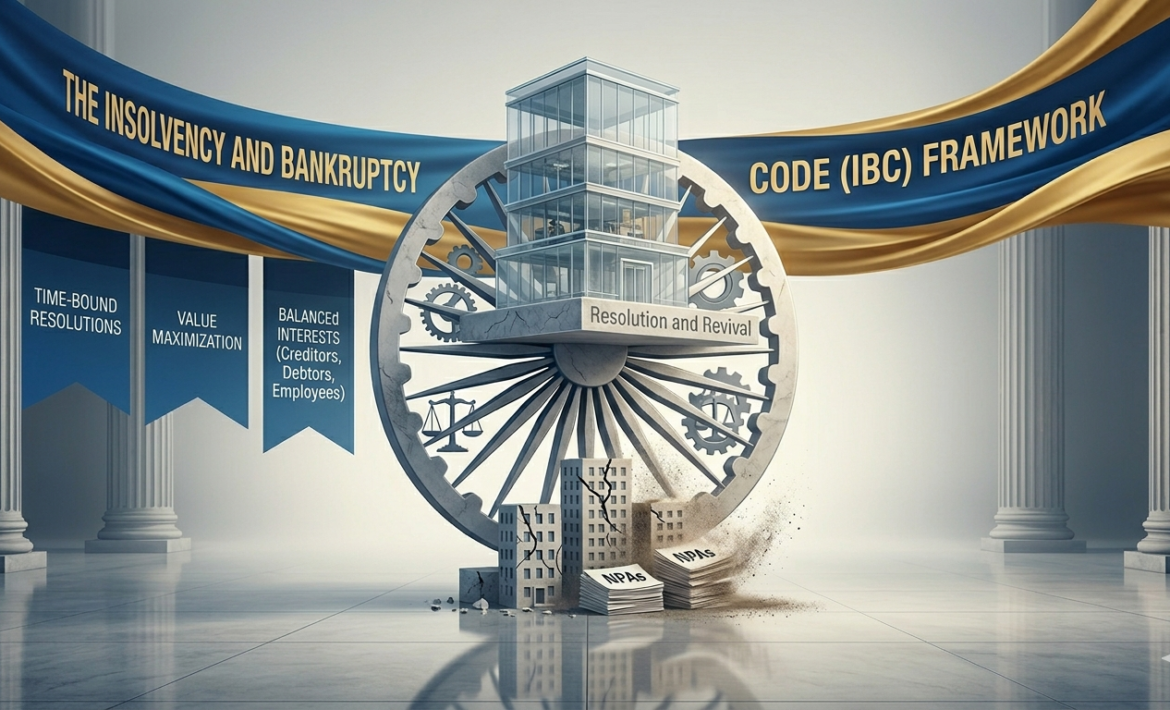
The primary objective of the IBC is to ensure the timely resolution of insolvency while maximising the value of assets. It seeks to balance the interests of all stakeholders, including creditors and debtors, and to promote a culture of responsible borrowing and lending. By focusing on resolution rather than mere recovery, the IBC provides an opportunity for businesses to revive and continue operations under structured supervision.
Stages of the Insolvency Process
The insolvency process under the IBC follows a structured approach, beginning with the initiation of proceedings upon the occurrence of a default. Once admitted, a moratorium is declared, which temporarily halts all legal actions and recovery proceedings. This creates a stable environment for evaluating the financial position of the debtor. The process is then managed by a Resolution Professional, who oversees the preparation and evaluation of resolution plans. If a viable plan is approved, the company is revived; otherwise, it proceeds to liquidation.
Challenges in Implementation
Despite its structured framework, the implementation of the IBC presents certain challenges. Delays in proceedings, often caused by litigation and procedural complexities, can affect the efficiency of the process. Valuation disputes and conflicting interests among stakeholders further add to the complexity. These challenges highlight the importance of careful planning and professional guidance in navigating insolvency proceedings.
Strategic Considerations for Businesses
For businesses, insolvency represents a critical juncture that requires informed decision-making. Early identification of financial distress can help in exploring alternatives such as restructuring or settlement with creditors. Even during formal proceedings, a well-defined strategy and proper documentation can significantly influence the outcome. The ability to assess risks and act proactively is essential in achieving favourable results.
Role of Legal Expertise
Legal advisors play a crucial role throughout the insolvency process, ensuring that the rights of stakeholders are protected and that proceedings are conducted in accordance with the law. Their expertise is particularly valuable in drafting applications, representing clients before tribunals, and negotiating resolution plans. A combination of legal and financial insight enables professionals to provide comprehensive solutions in complex cases.
Impact on the Business Ecosystem
The IBC has had a far-reaching impact on the business ecosystem in India. By improving recovery mechanisms and enhancing transparency, it has increased investor confidence and strengthened the credit system. It has also encouraged businesses to adopt more disciplined financial practices, contributing to overall economic stability.
Conclusion: Navigating Insolvency with Strategy
Insolvency is a challenging phase, but it also presents an opportunity for restructuring and renewal. Understanding the framework of the IBC and approaching it with a strategic mindset is essential for achieving optimal outcomes. With the right guidance, businesses can navigate financial distress effectively and emerge stronger in a competitive environment.